Cesspool vs septic tank in Florida: what is the difference?
A cesspool is a shallow underground system that lets household waste soak into the ground untreated. EPA says most are a concrete cylinder with an open bottom or perforated sides. They capture waste but do not treat it. A septic tank is watertight. Florida Rule 62-6.002 says it separates solids from liquid and sends clarified liquid on to a drainfield.
Not sure which one is under your yard? The sure way to know is to open it and look. Our septic tank inspection in South Florida opens the tank. We check the lids, the inlet and outlet baffles and the liquid level. Everything goes into a written maintenance report.
What is a cesspool?
A cesspool takes household waste underground and lets it seep out, with no treatment step. EPA calls it “a shallow, underground system for disposing of sanitary waste.” Most are a concrete cylinder with an open bottom, perforated sides or both. Waste from toilets, sinks and washing machines enters the cesspool and percolates out.
The federal rules define a cesspool as a drywell that receives untreated sanitary waste. EPA says cesspools are designed to capture sanitary waste, but they do not treat it. Untreated waste from cesspools can enter ground water and contaminate drinking water sources. Cesspool wastewater often carries more nitrates and coliform bacteria than drinking water allows.
What is a septic tank?
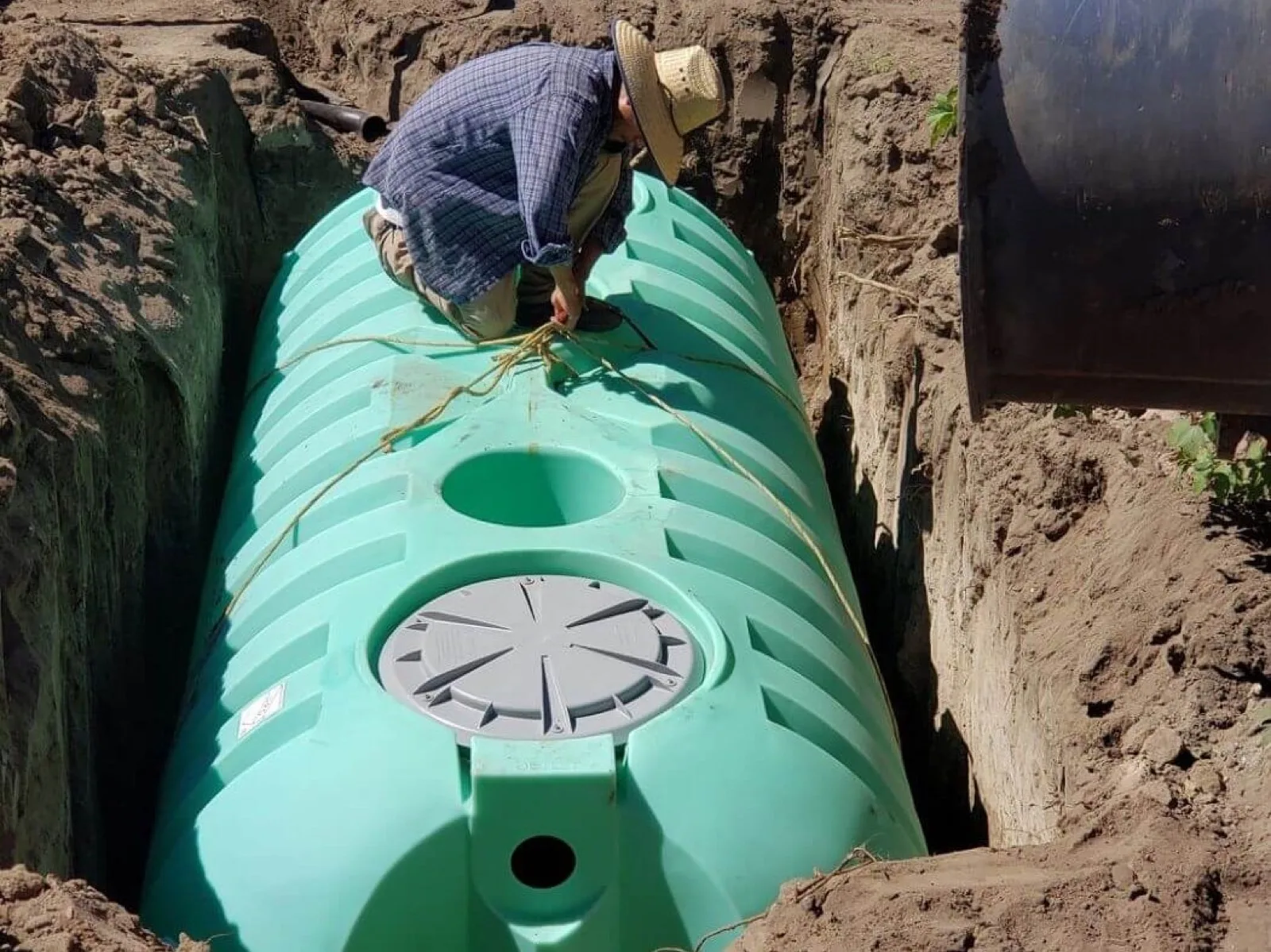
A septic tank is a buried, watertight container, usually made of concrete, fiberglass or polyethylene. EPA says it holds wastewater long enough for solids to settle to the bottom as sludge. Oil and grease float to the top as scum. Compartments and a T-shaped outlet keep the sludge and scum in the tank and out of the drainfield.
Florida’s own definition sits in Rule 62-6.002, last amended July 9, 2025. It calls a septic tank “a watertight receptacle” built to separate the solid and liquid parts of wastewater. The tank gives limited digestion of organic matter and stores the solids. Clarified liquid then flows on to a drainfield for further treatment.
The drainfield finishes the job. EPA describes a typical system as a septic tank and a drainfield, or soil absorption field. The soil accepts, treats and disperses the wastewater as it percolates through. Our leach field vs drain field guide covers the drain field side in detail.
Cesspool vs septic tank: how do they compare?
The difference is treatment. A cesspool sends untreated waste straight into the ground. A septic tank holds the solids back and passes clarified liquid to a drainfield for the soil to treat. EPA draws the same line. A system with a buried tank, a distribution system and a soil absorption area counts as a septic system.
| What you are comparing | Cesspool | Septic tank | Source |
|---|---|---|---|
| How it is built | Most are a concrete cylinder with an open bottom or perforated sides | A buried, watertight container, usually concrete, fiberglass or polyethylene | EPA, June 2026 |
| Treatment | Captures waste but does not treat it | Separates solids from liquid and gives limited digestion | EPA, June 2026; Florida Rule 62-6.002, July 2025 |
| Where the liquid goes | Percolates out of the cesspool into the ground | Clarified liquid flows on to a drainfield, where the soil treats it | EPA, June 2026; Florida Rule 62-6.002, July 2025 |
| Where the solids stay | Captured in the same cesspool, untreated | Held in the tank as sludge and scum by compartments and a T-shaped outlet | EPA, June 2026 |
| What Florida’s rule calls it | Cesspit, defined in the rule’s Florida Keys part (Rule 62-6.017) | Septic tank, defined in the statewide part (Rule 62-6.002) | Florida Rules 62-6.001, 62-6.002 and 62-6.017 |
Prices sit in our cost guides. See what septic tank pumping costs in South Florida for pump-outs. Our Florida septic tank installation cost guide covers new systems.
Are cesspools banned in the United States?
Federally, only large-capacity cesspools are banned. EPA banned the construction of new ones on April 5, 2000. It required all existing ones closed by April 5, 2005. A cesspool serving only one single-family home, with only household sanitary waste, is a small-capacity cesspool. It is not federally regulated, though state and local health departments may regulate it.
Large-capacity covers more than apartment buildings. EPA counts a cesspool serving several homes, such as a townhouse complex, as large-capacity. So is one taking waste from a business and a home, like a home-based beauty salon. EPA does not regulate non-residential cesspools that serve fewer than 20 people a day and take only sanitary waste.
When a large-capacity cesspool closes, EPA lists a septic system among the options. Its note on that option is short: septic systems provide some wastewater treatment.
What does Florida law say about cesspools?
Florida’s septic rule uses a different word: cesspit. Its definition sits in Rule 62-6.017, in the part of Chapter 62-6 that addresses the Florida Keys. That rule defines a cesspit as a pit, covered or not, that takes untreated sewage from a building. It sends that sewage, untreated or improperly treated, straight into the soil or limestone.
The Keys part goes further. It says a septic tank that functions as a cesspit counts as a cesspit. Rule 62-6.0181(1), in the same Keys part, says a cesspit or undocumented system must be replaced. The replacement must comply with Rule 62-6.018, another Keys rule.
Florida’s septic statute, section 381.0065, defines an onsite sewage system by its parts, including drainfield systems and a septic tank. Part I of the rule applies statewide, except where specific parts, such as the Keys part, change it. Rule 62-6.001(4) says an existing, previously approved system that remains in satisfactory operating condition stays valid.
Rule 62-6.003(1), as amended July 9, 2025, says a person may not construct, repair, modify or abandon a septic system without first getting a system construction permit. Under the Clean Waterways Act of 2020, county health department offices still handle septic permitting and inspection. Our guide to Florida septic rules and permits for Broward and Palm Beach covers who signs off where.
How do South Florida permits and water tables shape a replacement?
A replacement here gets built around the water table and a county permit. UF/IFAS says a drain field’s bottom should sit at least 24 inches above the wet season high water table. EPA says a drainfield is dug in unsaturated soil. The soil treats the wastewater before it reaches groundwater.
Locally, the work runs through the county health department. The Florida Department of Health in Palm Beach County regulates, permits and monitors septic systems there. In Broward, the repair permit packet says systems must be constructed by a person licensed. Its site evaluation takes two soil profiles within the proposed absorption area.
What should you do if you think your yard has a cesspool?
Book a septic inspection first. We open the tank and check the lids, both baffles and the liquid level at the outlet. A level below the outlet points to a leaking tank. The written report is one you can hand to a buyer or the county health department office.
If it is a septic tank that is due, our septic tank pumping service pumps it during the visit. If the old system has failed, it gets replaced with a permitted tank and drain field. That job is septic tank installation, and we are a licensed septic tank and drain field installation specialist.
What decides the next step:
- What the inspection finds. The lids, baffles and liquid level show the tank’s true condition.
- Whether the system was approved. Florida’s rule keeps a previously approved system valid while it still works.
- The permit. A new system, a repair or an abandonment needs a system construction permit before work starts.
- The ground. The new drain field’s bottom should sit at least 24 inches above the wet season high water table.
Find out what is in your yard
Tell us the city, roughly how old the home is and whether you can see a lid. We give a real arrival window on the phone, and quotes are free. We cover Broward, Palm Beach and Miami-Dade from our base in Pembroke Pines. Call (954) 350-2046 any hour, 7 days a week, or use the quote form.